
How Cheboygan County Warrants Are Issued
Warrants in Cheboygan County come from the courts, not from the sheriff. A judge or magistrate signs the order, and the sheriff's office and other agencies then carry it out. The county runs two trial courts that produce this paperwork. The 53rd Circuit Court handles felony matters, and the 89th District Court handles misdemeanors, traffic, and the front end of felony cases. Because the order starts with a court, the fastest confirmation usually pairs a court check with a call to the sheriff.
No public county page lists active warrants by name. That is the single most important fact for anyone starting a search here. There is no county warrant database to log into, no downloadable most-wanted roster, and no online form that returns a warrant result. Instead, the sheriff's office serves as the central warrant contact point, and the county's sheriff's department page gathers the jail, civil process, police reports, and public-safety phone numbers in one place.
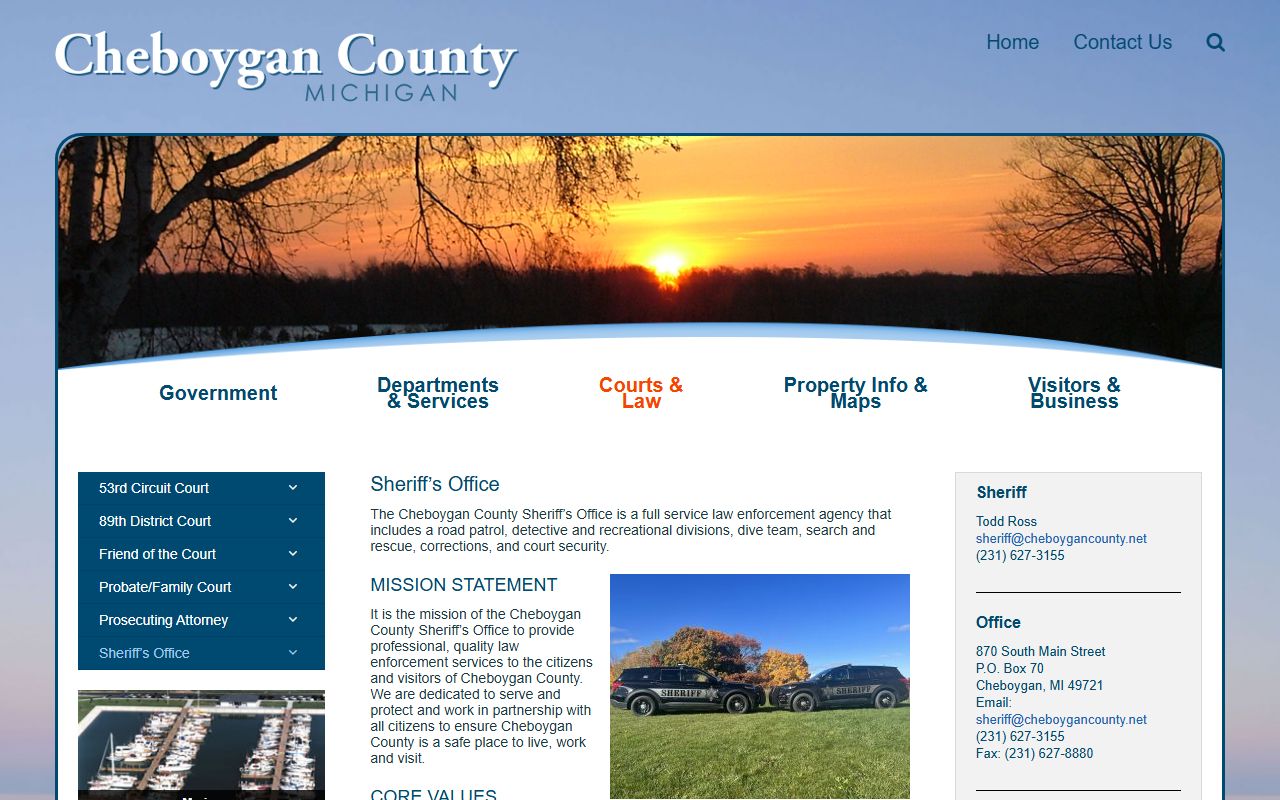
The sheriff page is the closest thing the county has to a warrant landing page, even though it holds no roster. It points to the offices that can confirm a warrant and take a bond. Warrant information reaches the public through people, not a feed, so there is no update schedule to watch. A record's status changes when a court acts on it or an officer serves it, and the only way to learn that status is to ask an office directly.
Types of Warrants in Cheboygan County
Not every warrant means the same thing. The label tells you which office created it and why, which in turn tells you where to ask about it. Most Cheboygan County warrants fall into a handful of categories, and knowing the difference helps a person figure out whether the issue is a missed court date, an open criminal charge, or a search authorization tied to an investigation.
- Arrest warrant - Issued when a court finds probable cause to believe a person committed a crime, authorizing officers to take that person into custody.
- Bench warrant - Issued by a judge when someone fails to appear for a hearing or ignores a court order, often surfacing during a routine district court check.
- Capias or failure-to-appear warrant - A form of bench warrant that commands the sheriff to bring a named person before the court, frequently tied to a missed appearance or unpaid obligation.
- Search warrant - Authorizes officers to search a specific place or property for evidence and is generally not disclosed while an investigation stays open.
Traffic and lower-level bench warrants usually trace back to the 89th District Court, since that is where citations and misdemeanors are answered first. Felony arrest warrants connect to the 53rd Circuit Court once a case moves up. Search warrants sit with the investigating agency and the prosecutor, and they are the least visible of the group because their release could compromise an active case.
How to Check for a Cheboygan County Warrant
With no online list, a warrant check follows a chain of offices rather than a search box. The order below moves from the sheriff to the courts, then to the prosecutor and state systems, which mirrors how a warrant actually travels through the county. Start at the top and stop as soon as one office answers the question.
- Contact the Cheboygan County Sheriff's Office at its main number and, if records are not shared by phone, submit a written request through the county's Freedom of Information Act process. The sheriff is the central warrant contact point and can direct a caller to the right desk.
- Check the trial courts for active matters. The 89th District Court answers bench-warrant and bond questions for traffic and misdemeanor cases, and the 53rd Circuit Court covers felony matters, so a court clerk can confirm whether a case has an open order.
- Ask the prosecuting attorney's office for procedural context when a charge is involved, since that office handles the charging side and can explain how a matter moves forward.
- Use statewide Michigan systems when the issue may reach beyond the county, including the state case-search tool and the Michigan State Police resources described below.
Service of process runs through the sheriff's civil division, which the county describes on its civil-process page. That page confirms the sheriff must keep a civil division by statute and that the division handles service of summons, notices, and related papers.
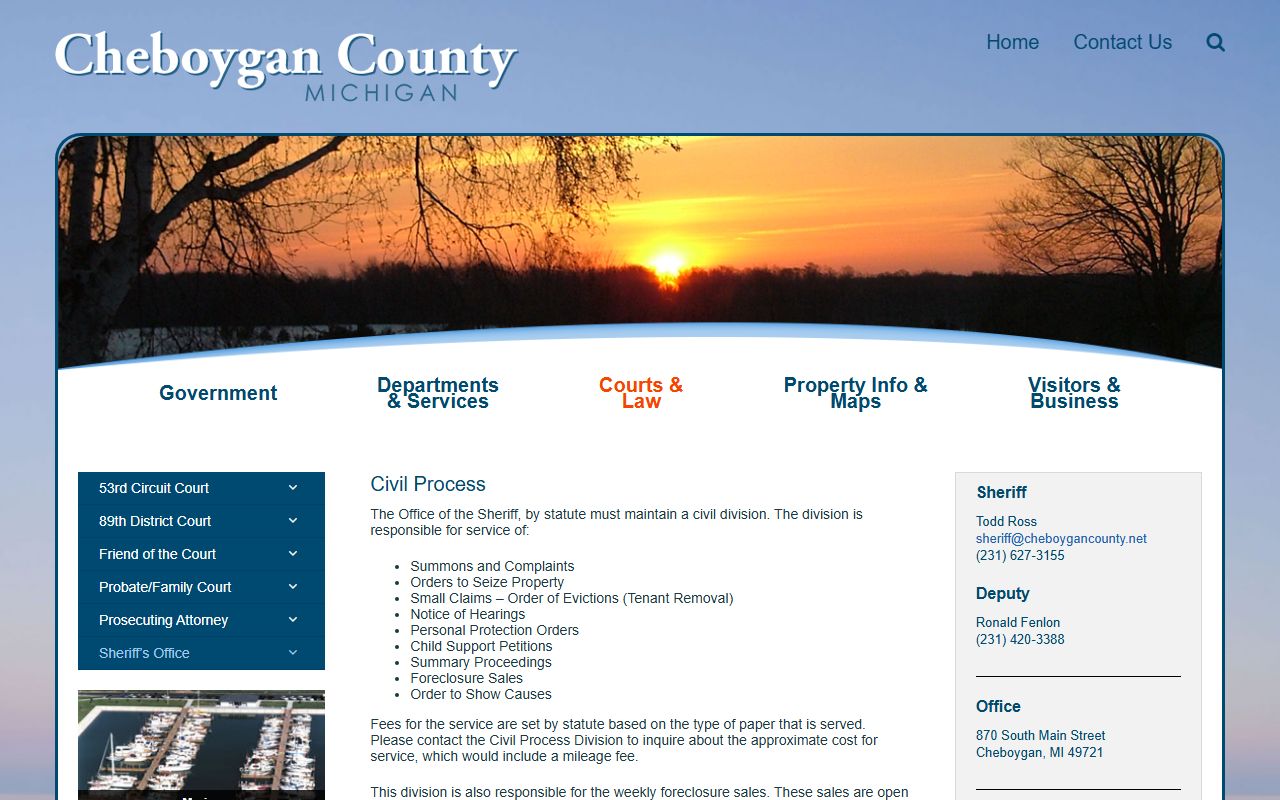
The civil-process detail matters because many people asking about a warrant are really asking whether a paper is being served on them. Confirming that with the civil division can settle the question without a trip to a court counter. For the underlying case behind an arrest warrant, the full file lives in the Cheboygan County criminal court records, where charges, hearings, and disposition are tracked.
What to Provide for a Cheboygan County Warrant Check
Because the request goes to a person rather than a database, the more identifying detail a requester can supply, the faster an office can locate a record. There is no county warrant form field to fill in online. Instead, these are the details the sheriff or a court clerk will typically ask for when checking whether an order exists for a name.
| Detail to Provide | Type | Required | Notes |
|---|---|---|---|
| Full legal name | Text | Yes | Include the last name and any middle name or suffix to narrow common names. |
| Date of birth | Date | Helpful | Distinguishes people who share a name and speeds a manual lookup. |
| Case or citation number | Text | If known | Directs a court clerk straight to the matter behind a bench warrant. |
| Court involved | Text | If known | Knowing district versus circuit tells the clerk which docket to search. |
| Requester relationship | Text | Sometimes | Some nonpublic details are released only through the FOIA process. |
None of these guarantee an answer over the phone. Michigan's Freedom of Information Act gives an agency five business days to respond to a written request, whether by providing records, asking for clarification, estimating a fee, or denying release. Sensitive warrant details tied to an open investigation can be withheld, so a clean request with a name, a date of birth, and any case number gives the best chance of a useful reply.
What a Cheboygan County Warrant Record Contains
Even though the county does not publish warrants online, a warrant document itself follows a standard shape. The fields below describe what a warrant record generally contains once an office pulls it, and they help a requester understand what an answer should cover. This is a description of the record type, not a preview of a county portal, because no such portal exists.
| Field | What It Shows |
|---|---|
| Warrant Number | The unique identifier a court assigns to the order for tracking and service. |
| Issue Date | The date a judge or magistrate signed the warrant. |
| Charge | The offense or reason behind the order, such as a specific crime or a failure to appear. |
| Bond Amount | The amount set for release, if the court attached a bond to the warrant. |
| Issuing Court | Whether the 89th District Court or the 53rd Circuit Court signed the order. |
A person named in an arrest warrant is often also of interest for jail booking, so the Cheboygan County inmate records page covers the custody side once someone is taken in. The warrant record and the booking record are separate files held by different offices, which is why a full answer sometimes takes a call to both the court and the jail.
Posting Bond in Cheboygan County
When a warrant carries a bond, clearing it usually means posting that amount so the person can be released or resolve a missed appearance. The 89th District Court explains the mechanics on its bond-posting page. Bond can be posted at the court office in cash during business hours, and after hours it can be posted by card through the sheriff's kiosk. That kiosk sits within the same courthouse complex as the jail and the courts.
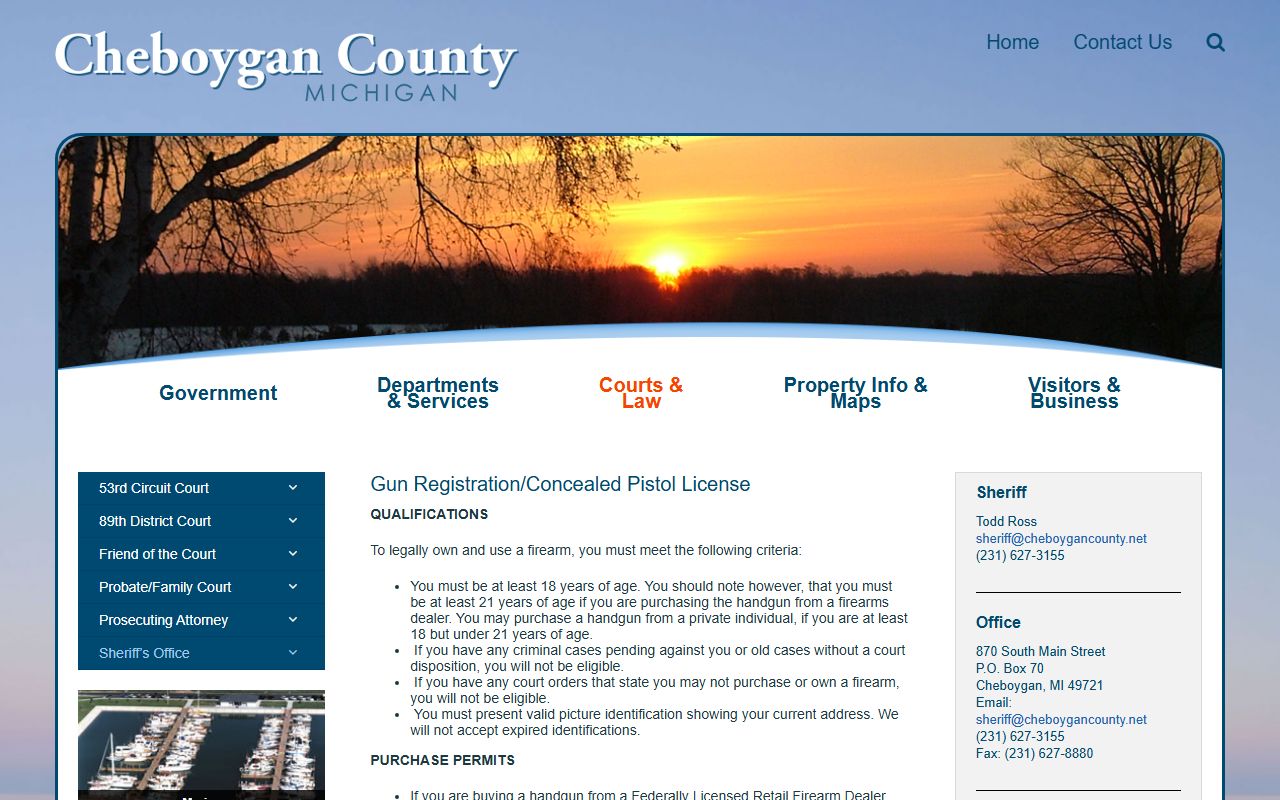
The sheriff's lobby handles several walk-in functions beyond bond, including gun registration and concealed pistol license fingerprinting, as shown on the county's lobby services page. The shared campus means one Main Street address covers the courts, the jail, and the sheriff, so a bond, a warrant question, and a records request can often be handled in the same visit. Cash-only rules apply to the in-person bond window, while the after-hours kiosk takes card payments.
What to Do About an Outstanding Warrant
If a check confirms an active warrant, the next steps are practical. A person can consult a defense attorney, arrange to post any bond the court set, and in many cases resolve the matter through a voluntary appearance rather than waiting to be taken into custody. Handling a bench warrant early, especially one tied to a missed hearing, often keeps a small issue from growing.
The route runs through the same offices used to confirm the warrant. The district court can explain what a scheduled appearance requires, the sheriff's kiosk or the court window can take a bond, and the prosecutor's office can clarify how a charge will proceed. Voluntary surrender is a decision best made with counsel, because how and when a person appears can shape what happens at the first hearing.
Important: Speak with a licensed Michigan attorney before turning yourself in on any warrant. Legal advice about bond, charges, and timing protects your rights far better than acting alone.
State Searches Beyond Cheboygan County Warrants
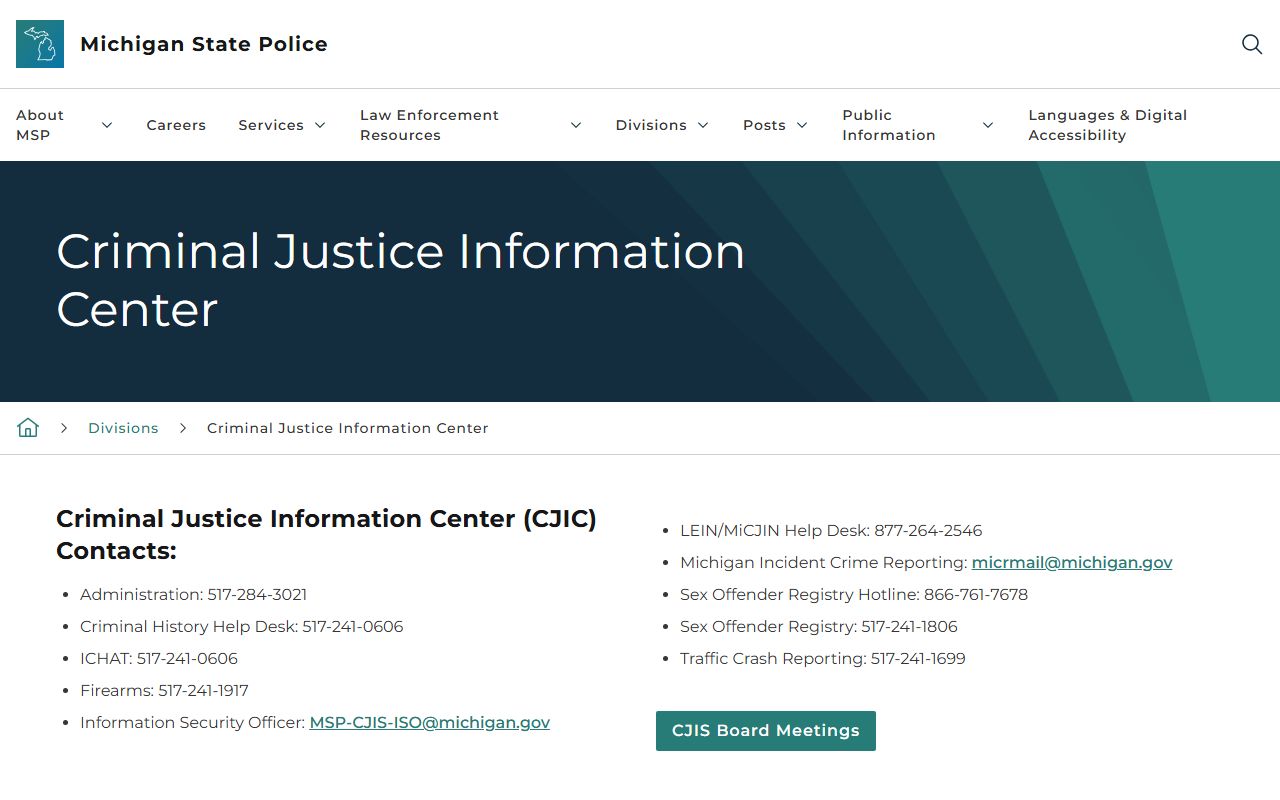
Some questions reach past the county. When a matter may involve state custody, registration, or another jurisdiction, Michigan runs statewide tools that fill gaps the county cannot. The Michigan State Police maintain a criminal justice information center that supports background and registry questions, and the county sources point users toward these state layers rather than a local warrant feed.
The Michigan State Police criminal justice information center is the state hub for criminal-history and registry contacts. It is where formal record checks and registry questions are routed at the state level.
For questions about registered offenders, the state runs a separate public tool. The Michigan sex-offender registry lets anyone look up registered individuals by name or area, which is a genuine public search unlike the county warrant question.
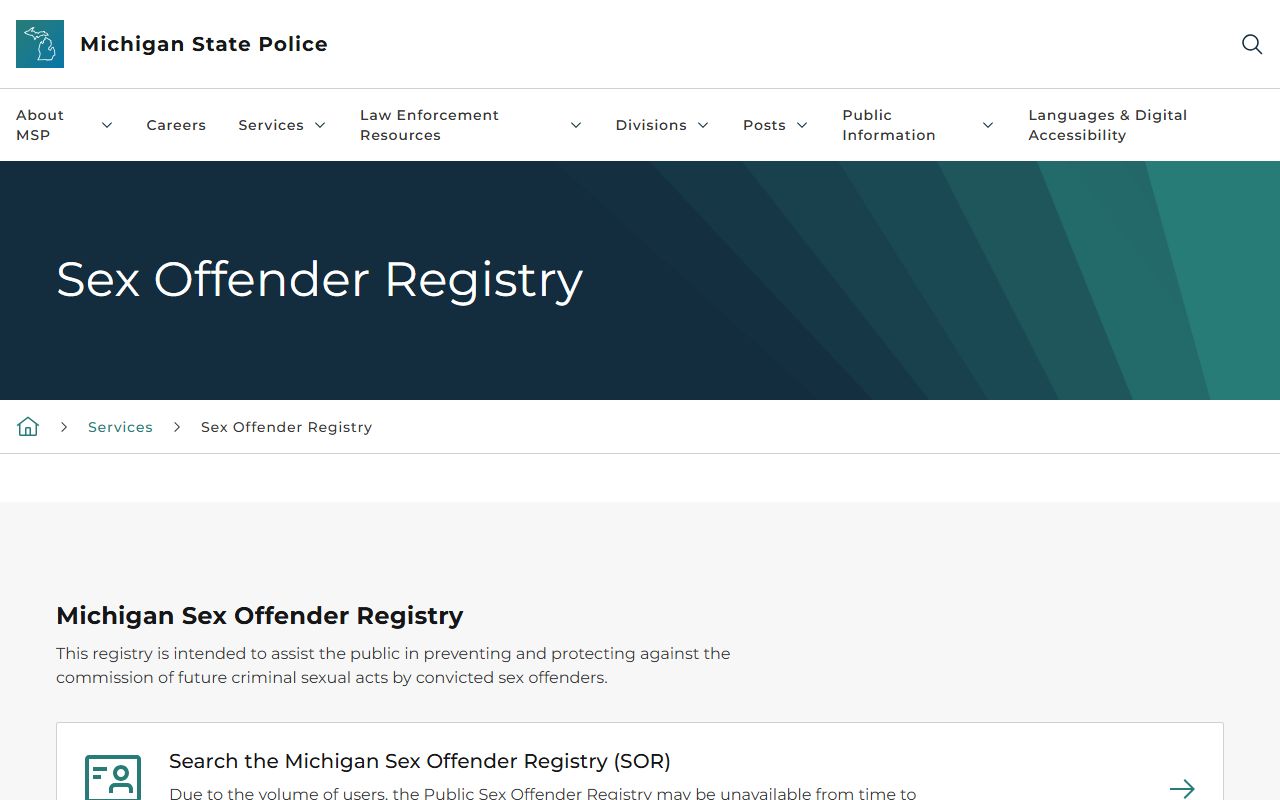
The registry is the closest public-lookup match to what people expect from a warrant search, so it is worth naming even though it answers a different question. For the underlying court case behind a Cheboygan County matter, the statewide MiCOURT case-search tool at the Michigan Courts site lets a user search by party name, case number, or court, which can reveal whether a case is open even when a warrant status is not posted anywhere.
No Warrant App or Online List in Cheboygan County
It is worth saying plainly that Cheboygan County does not offer a warrant app or an online warrant list. No county page points to an app-based warrant tool, and no mobile lookup exposes custody or warrant status for the county. The path here is human contact and a records request, not a download.
The Michigan State Police do publish a mobile resources page for state-level tools, which is useful for confirming that the available apps are statewide, not a local Cheboygan warrant search.
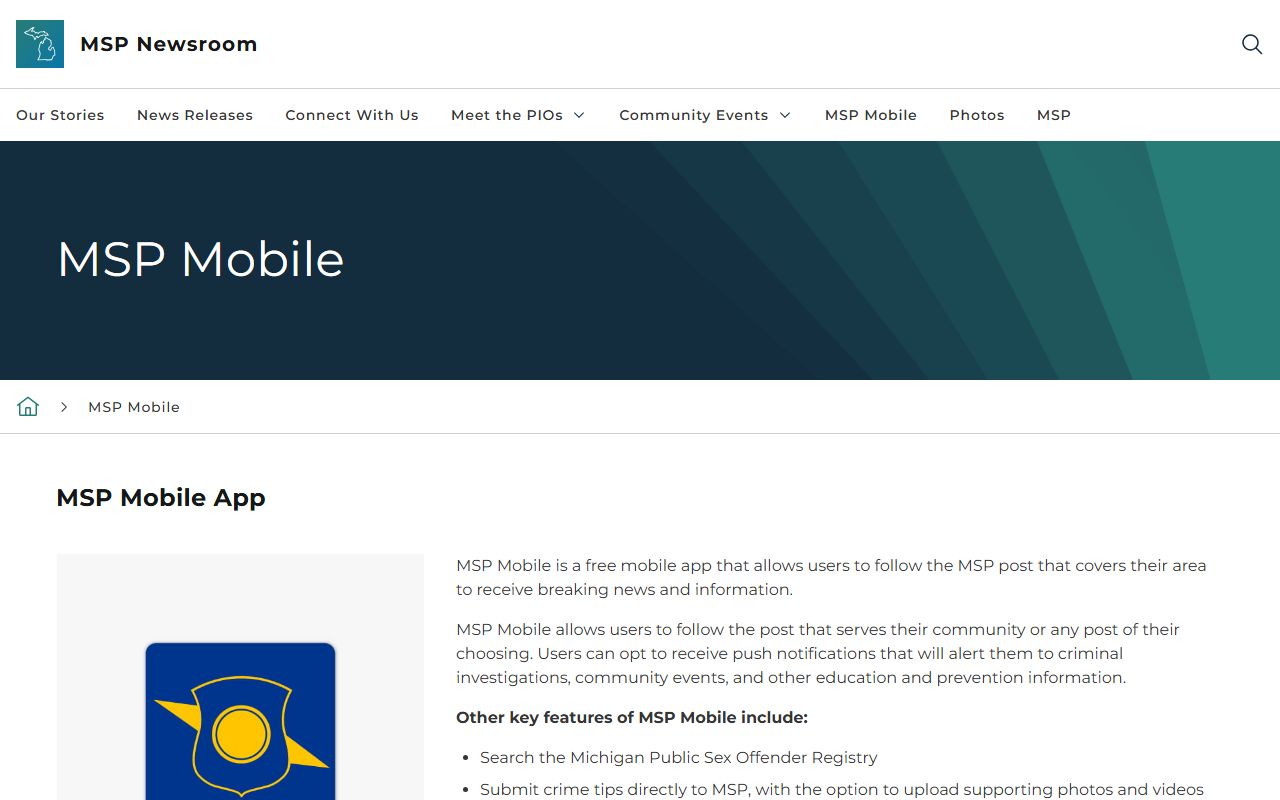
Checking that page keeps expectations realistic. Anyone hoping to tap a phone and pull a county warrant will not find that here, and treating the sheriff, the courts, and the FOIA process as the real tools saves time. Note that a warrant answer in this county always comes from an office, so plan on at least one phone call or written request rather than a self-service lookup.
Restricted Cheboygan County Warrant Records
Not every warrant is open to the public, and several categories are withheld by design. Search warrants and details tied to an open investigation are commonly sealed while the case is active, since early release could tip off a suspect or endanger the work. A police report connected to a warrant may not be released until the investigation closes, and the county notes that report requests can take five to ten business days.
Juvenile matters carry their own protections. Juvenile delinquency, abuse, and neglect cases handled on the family side are not public, and sensitive identifiers such as dates of birth, license numbers, and account numbers are redacted from court records under state guidance. Federal warrants are a separate system entirely and are not held by the county, so questions about a federal matter route to the U.S. District Court for the Eastern District of Michigan rather than to the sheriff or the county courts.