
Cheboygan County Arrest Records and Court Charges
An arrest record is the account of the arrest itself. It notes who was taken into custody, which agency made the arrest, and the booking that follows at the county jail. In Cheboygan County the sheriff runs the jail at the main Main Street complex, and booking detail lives on the custody side rather than in the courts. There is no public county jail roster in the official sources, so the arrest and booking side of a case is reached through the sheriff and jail contacts covered on the Cheboygan County inmate records page.
The court charge record is a different document. Once someone is arrested, the prosecutor reviews the case and decides the formal charges. Those charges are filed with the court and tracked as the case moves forward. That charge record shows what a person was accused of, the statute cited, and the current status of each count. Court charges after arrest are only the front end of the story. The full case file, the pleas, and the final outcome sit in the Cheboygan County criminal court records. This page stays focused on the arrest-to-charge link and the charges themselves.
How Charges Get Filed After a Cheboygan County Arrest
The charge record does not begin at the arrest. It begins when a charging document is filed. After booking, the case moves to the prosecuting attorney, and Prosecuting Attorney Melissa Goodrich decides whether to charge, what to charge, and at what level. The 89th District Court is the frontline court where most charges first appear, including all misdemeanor and traffic counts and the front end of felony cases. Michigan uses three main charging documents, and the one used depends on the seriousness of the offense.
| Complaint | Information | Indictment | |
|---|---|---|---|
| Filed By | Officer or prosecutor | Prosecutor | Grand jury |
| Common For | Misdemeanors | Many felonies | Serious felonies |
| Starts | The case | The case | The case |
Most Cheboygan County cases start with a complaint. Felony matters run through a probable cause conference and a preliminary examination in the district court before they are bound over to the 53rd Circuit Court, where a felony case is often carried forward on an information. Grand jury indictments are rare at the county level. Whichever document is used, the filing date is the moment the charge record officially opens.
Charge Codes and Severity Levels in Cheboygan County
Each charge is tied to a statute or a local ordinance, and that citation is the charge code. Michigan counts cite the Michigan Compiled Laws, so a charge line shows the code, a short label for the offense, and a severity level. Severity is what decides which court hears the case and how it can be punished. One arrest can produce several separate charges, and each one carries its own code and status.
- Felonies are the most serious level and are punishable by more than one year. Felony cases are adjudicated in the 53rd Circuit Court after a district court front end.
- Misdemeanors are lower-level crimes handled in the 89th District Court, with jail exposure capped at up to one year for the most serious grades.
- Civil infractions, including most traffic tickets, are not crimes. They are handled through the district court and do not carry jail time.
Reading the level matters because it changes the venue. A felony arrest and a misdemeanor arrest can both start in the district court, yet only the felony climbs to the circuit court for its final chapter. When a charge record lists more than one count, the highest level usually drives where the case lands.
Charge Status Changes on Cheboygan County Records
Charges are not fixed once they are filed. As a case moves, the prosecutor and the court can amend, reduce, add, drop, or dismiss counts. That is why a charge record read at the arrest stage can look different from the same record read months later. The terms below appear often, and each one changes what a charge means for the person named.
| Status | What It Means |
|---|---|
| Pending | The charge has been filed and the case is still moving through the court. No final outcome has been entered. |
| Amended or Reduced | The prosecutor changed the charge, often to a lower level or a different statute, before or during the case. |
| Dropped or Added | A count was removed or a new one was added as the facts and evidence developed. |
| Dismissed | The court ended the charge, so it does not go to a verdict. A dismissal can be with or without prejudice. |
| Nolle Prosequi | The prosecutor formally chose not to pursue the charge, closing it without a conviction. |
A dismissed or nolle prosequi charge still leaves a trace. The count may show as closed rather than erased, and the arrest that led to it can remain on record. Clearing that history takes a separate legal step, covered further down.
Charges vs. Convictions in Cheboygan County
Being charged is not the same as being convicted. A charge is an accusation. A conviction is a finding of guilt entered after a plea or a trial. This gap is the single most misread part of a charge record. A person can be charged, then have every count dropped or dismissed, and never be convicted of anything. The table below sets the two side by side.
| Charge | Conviction | |
|---|---|---|
| Stage | Accusation | Verdict or plea |
| Burden of Proof | Probable cause | Beyond a reasonable doubt |
| Meaning | A formal claim of wrongdoing | A legal finding of guilt |
| Public Record | Yes | Yes |
| Result | Case is pending or closed | Sentence and criminal history |
Both charges and convictions can appear in a public search. That is why the status field carries so much weight. Reading a charge as if it were a conviction is a common and costly mistake, especially where the case later ended in a dismissal.
How to Find Cheboygan County Arrest Records and Charges
Cheboygan County does not publish a public charge portal or a booking blotter in its official sources. There is no single county web page where a name returns a list of charges. Instead the county offers a fallback chain, and the right stop depends on whether the question is about the charges, the arrest report, or a wider criminal history. The statewide MiCOURT case search is the usual first move, followed by the courts, the prosecutor, and the sheriff.
- Open the MiCOURT case search and enter a defendant name or a case number to start.
- Narrow to the Cheboygan County court, either the 53rd Circuit Court for felonies or the district court for misdemeanor and traffic matters.
- Open the case and read the charge list, the statute cited for each count, and the current status.
- For the arrest and report side, request the police report from the sheriff through a public-records request.
- For charging questions or victim-services context, contact the prosecuting attorney's office.
The arrest report itself is a sheriff record, not a court record, and it follows a different clock. The sheriff's office explains its police-report request process and the timing that applies to arrest-adjacent documents.
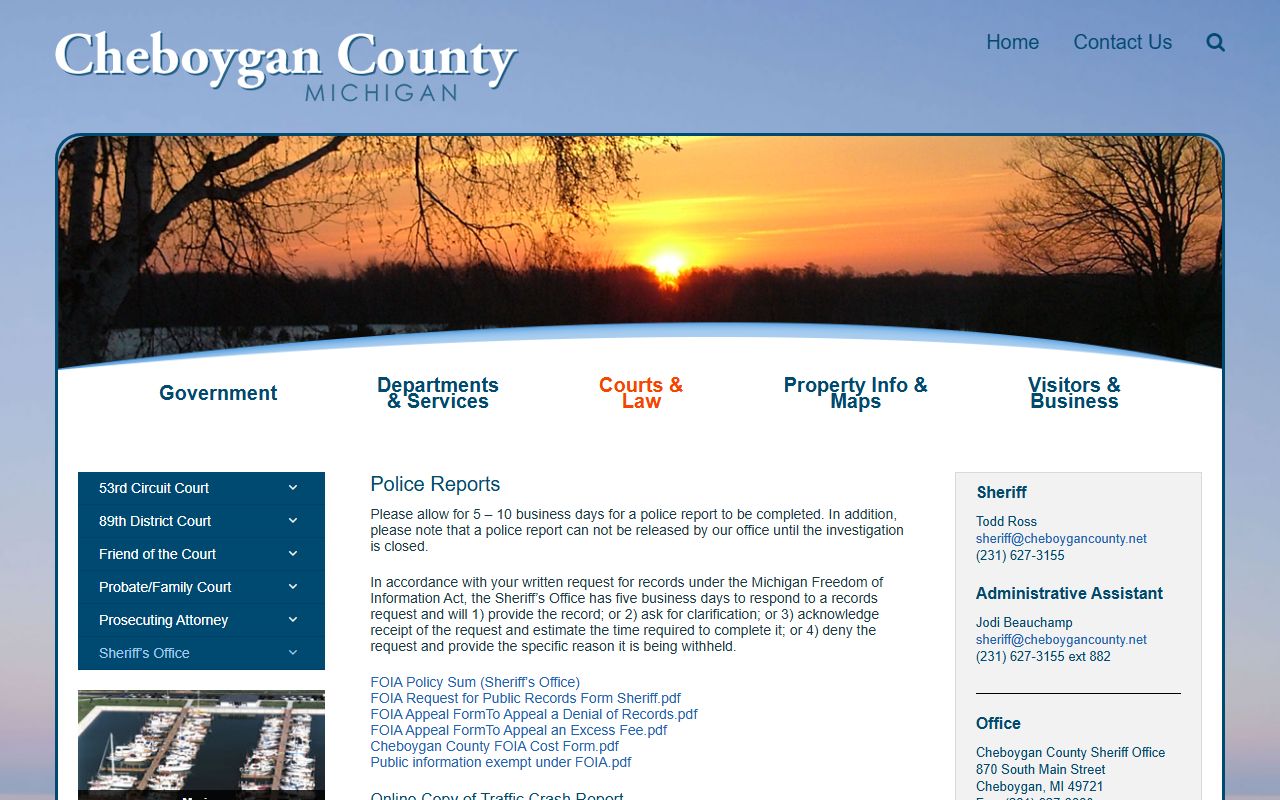
The sheriff notes that a police report can take five to ten business days and cannot be released until the investigation is closed. That timing is the main reason the arrest side of a case often lags behind the charge side, which appears in court as soon as the prosecutor files.
Public-records requests in Michigan run under the Freedom of Information Act, and the statute spells out how an agency must handle a request. The access-methods section of the law describes how records are furnished and how a request is processed.
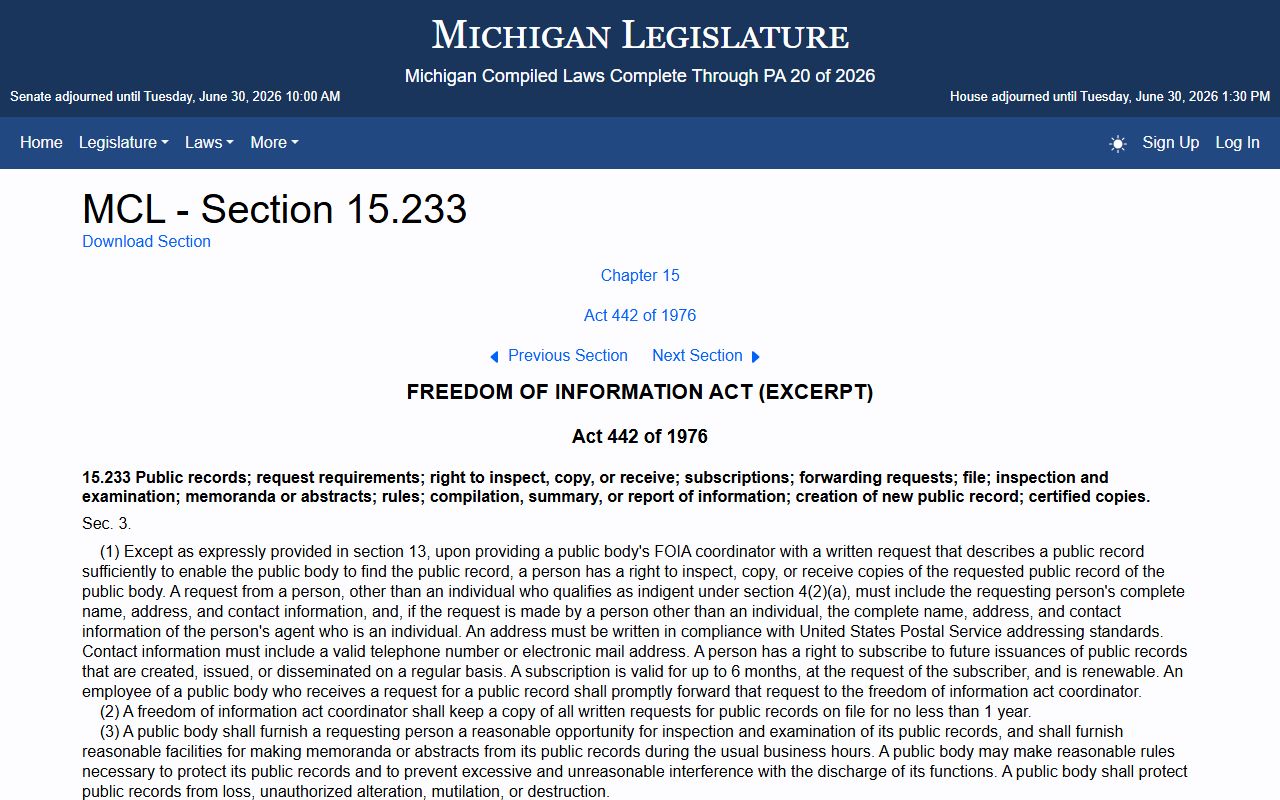
Reviewing the FOIA access-methods section before filing helps a requester ask for the right format and set a realistic timeline. The sheriff must respond within five business days, and the office can provide the record, ask for clarification, estimate a cost, or deny in part.
Note: The MiCOURT search shows case metadata and hearing scheduling first, so early charge detail may appear before full filings are posted.
Michigan FOIA and Public Access to Charge Records
Charge records are public because Michigan law starts from a presumption of openness. The Freedom of Information Act gives any person the right to inspect and copy the records of a public body, and it is the backbone of both the court and sheriff channels described above. Understanding a few core sections makes a request far more likely to succeed.
The law opens by declaring the public policy of full and complete disclosure, which is the foundation for reaching arrest-adjacent and charge material.
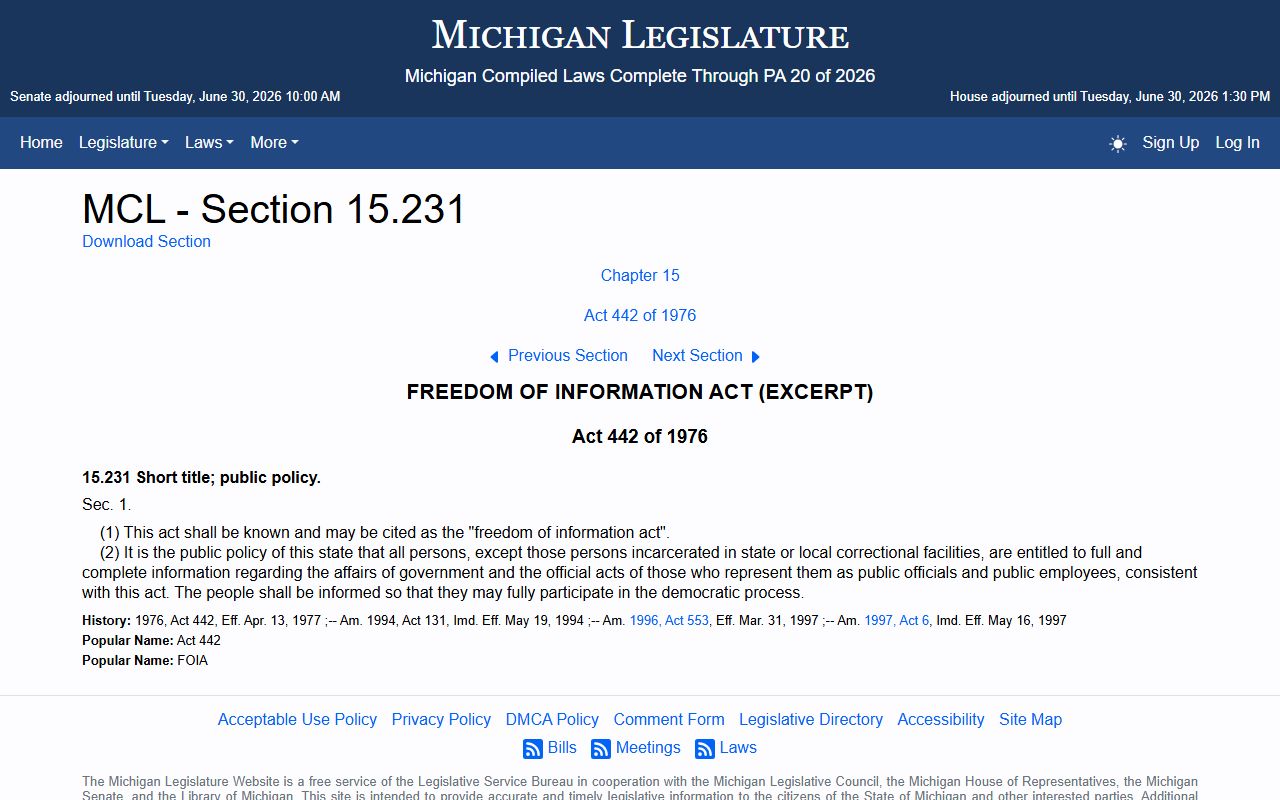
The public-records right section states that people are entitled to information so they can take part in the democratic process. That framing is why a resident does not need to explain why a record is wanted.
The next section defines the terms that decide who and what the law covers. It sets out what a public body is, what a public record is, and who counts as a requester.
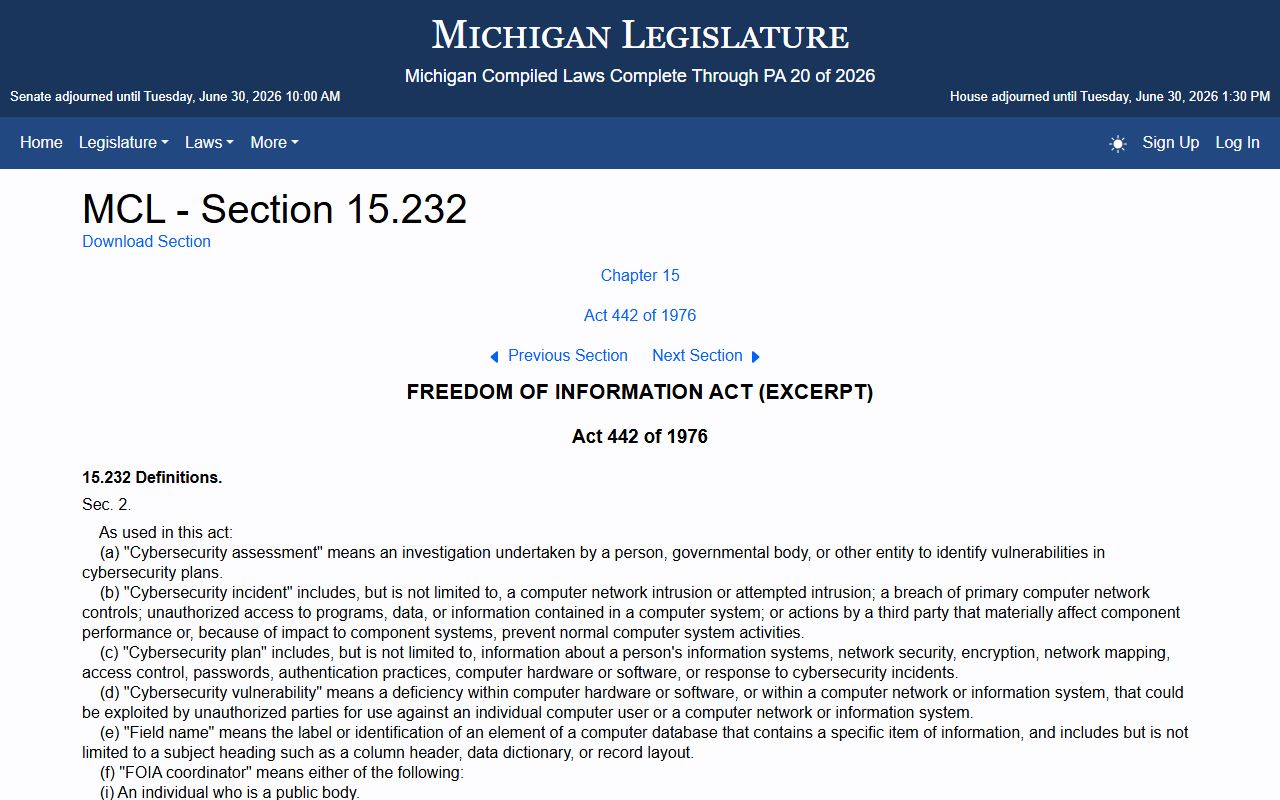
The definitions and scope section matters because it confirms that the sheriff and the courts are public bodies whose charge and arrest documents fall within reach, subject to the exemptions. Those limits are set out in their own section.
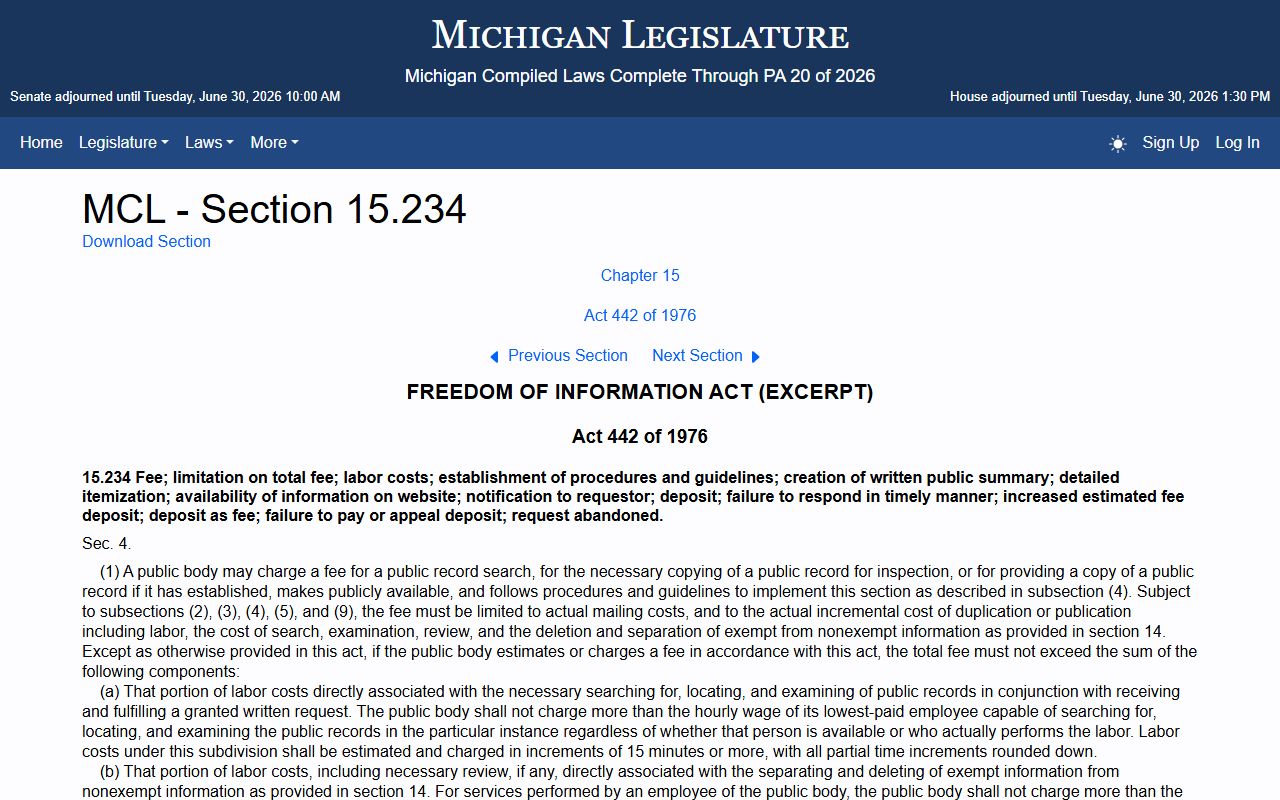
The exemptions section lists what an agency may withhold, which is why an open investigation or protected personal information can keep part of a record from release. Michigan court guidance also shields identifiers such as dates of birth, driver's license numbers, and financial account numbers, so a public charge record may arrive with some fields redacted.
Restricted and Set-Aside Charge Records in Cheboygan County
Not every charge stays visible forever. Juvenile matters are handled through the Probate and Family Court and are largely not public. Sealed counts and records tied to an ongoing investigation are withheld, and dismissed charges may be limited from public view. On top of that, Michigan lets people ask a court to set aside qualifying convictions so they no longer appear in most public searches.
The state set-aside pathway is the Michigan version of expungement, and it is the main way an old charge or conviction is removed from public reach.
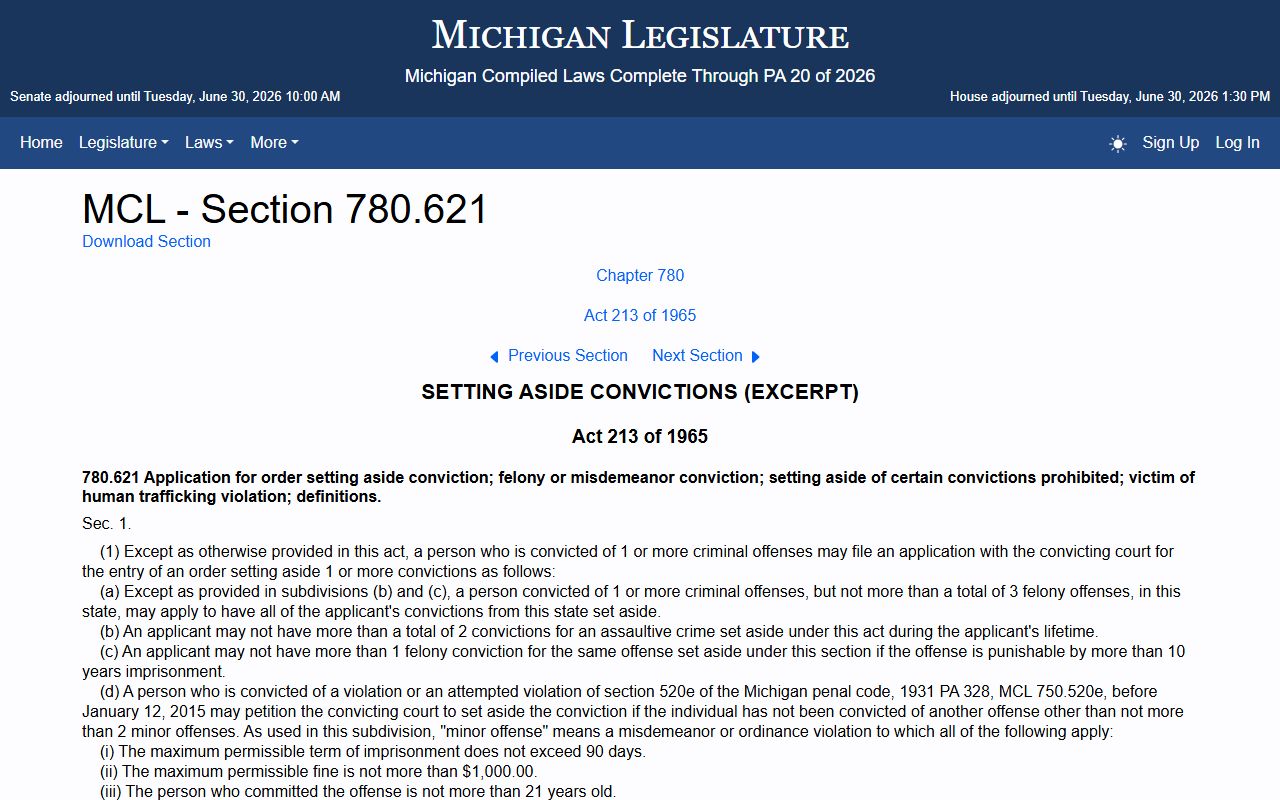
The set-aside statute lays out which offenses qualify and how the process works, and the state Clean Slate effort connects to it. A charge that has been set aside should no longer surface in a standard public lookup, though certain agencies retain limited access. When a search still shows a count that a court has cleared, the district court and the county clerk are the offices to contact for a correction.
Important: This is a private resource, not a government office or an FCRA-regulated consumer reporting agency, so its information cannot be used for employment, credit, or tenant screening.